

Engineering firms invest heavily in expertise, equipment, people and impressive projects. Yet many of their websites do a poor job of connecting those strengths. Valuable service pages, case studies and technical articles often sit in isolation, leaving both Google and potential customers to work out how everything fits together.
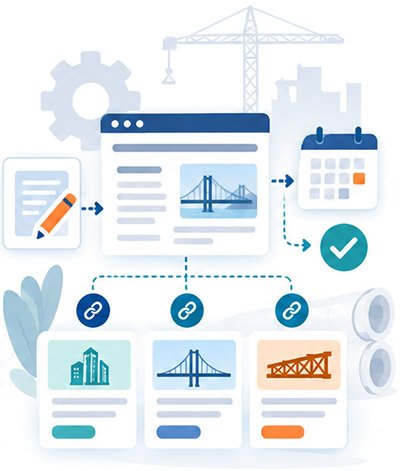
Internal linking fixes that. By creating clear, useful pathways between related pages, you help search engines understand your expertise and guide buyers towards the services, proof and next steps that matter most.
It should be treated as part of a wider Web Design for Engineers and SEO for Engineers strategy – not as a last-minute SEO task. Done well, it improves navigation, supports your most valuable commercial pages and helps turn technical content into qualified enquiries.
What Is Internal Linking?
An internal link takes a visitor from one page on your website to another page on the same site. A blog about stainless steel fabrication might point to the main fabrication service page; a pharmaceutical project case study might lead to the relevant industry page. These links help readers explore related information while giving Google valuable context about your site’s structure and priorities.
Why Internal Linking Matters for Engineering Websites
Engineering websites become complex quickly. A business may offer several services, work across multiple industries, operate in different regions and showcase dozens of specialist projects. Without a clear linking structure, important pages become disconnected and excellent content gets buried.
A planned network of links connects services, sectors, projects and supporting content. Google can see which pages are central to your expertise, while visitors can reach the information they need without hunting through menus or returning to search.
Help Google Understand Your Core Services

Suppose your engineering company provides:
- Precision engineering
- Steel fabrication
- CNC machining
- Automation
- Mechanical engineering
- Maintenance engineering
Each priority service deserves a dedicated page, but it should not stand alone. Relevant articles, case studies and industry pages should point back to it using clear, natural anchor text.
For example, a guide to machining tolerances and a precision-engineering case study can both support the CNC Machining page. Over time, that pattern signals that the service page is an important hub – not just another URL in the sitemap.
Build Topic Clusters Around Commercial Priorities
Not every page has the same commercial value. A blog post may attract an early-stage visitor, but a service page is more likely to generate an enquiry. Your internal linking should therefore move readers – and internal authority – towards the pages tied to the services you most want to grow.
If precision engineering is a priority, make the core service page the hub. Surround it with useful supporting content on tolerances, materials, complex components, medical devices, aerospace applications and completed projects. Link those pages back to the hub, and connect them to one another only where the relationship genuinely helps the reader.
Turn Case Studies into Internal Linking Assets
A completed project should be more than a gallery. A strong case study explains the client’s challenge, the technical requirements, your approach, the obstacles you overcame and the result.
From there, link naturally to the relevant service and sector pages. A stainless steel fabrication project can support the fabrication service; a factory automation project can point to Industrial Automation; and a pharmaceutical project can reinforce your sector expertise. One page now does three jobs: it proves capability, supports SEO and gives buyers confidence.
Connect Industry Expertise to Relevant Services
If pharmaceutical, food and beverage, medical devices, manufacturing, construction, energy, aerospace or agriculture are commercially important sectors, give each one a useful page rather than a thin label in the navigation.
A Pharmaceutical Engineering page, for example, might connect to automation, fabrication, maintenance, cleanroom and process engineering. Relevant service pages can return the link. This two-way relationship shows how your technical capabilities apply in a real operating environment and lets buyers follow the route that matches their needs.
Write Links for People, Not Just Search Engines

Every supporting article should have a purpose. A guide to predictive maintenance can lead to Maintenance Engineering; an automation article can support Industrial Automation; and a CNC guide can point to CNC Machining. The link should feel like a useful next step, not an interruption.
Use descriptive anchor text that tells the reader what comes next. “Explore our precision engineering services” is clearer than “click here”. Vary the wording naturally, avoid stuffing the same keyword into every link and keep one simple test in mind: Would this link help the reader?
Use Authority Wisely – and Fix Orphan Pages
Some pages naturally earn more traffic and external links than others. A popular technical guide or standout case study can pass attention and value to a related commercial page, provided the link is relevant and useful.
At the same time, check for orphan pages – important URLs with no internal links pointing to them. New services, buried projects and sector pages often fall into this category. If a page matters commercially, make sure relevant content leads people to it.
Guide Buyers Through a Longer B2B Journey
Internal linking is not only about Google; it can support the sales journey. A prospect might move from a technical search to a helpful article, then to a service page, a case study and finally an enquiry. The job of each link is to make the next step obvious and relevant.
That matters in engineering, where procurement teams may want capability information, technical teams may need specifications and senior decision-makers may look for proof of delivery. A well-connected website helps each person find the evidence they need, building confidence throughout a longer buying process.
Build a Clear Website Structure
A practical engineering website might be organised around:
- Home
- Engineering services
- Industries
- Projects
- Technical resources
- Locations
- About
- Contact
Within that structure, services should have dedicated pages, industries should connect to the services they use, projects should support both, and technical content should reinforce the pages tied to growth. The result is a clear hierarchy instead of a collection of unrelated pages.
Keep Links Relevant Across Locations
If you serve specific regions, location pages can point to the services available there, and service pages can reference key areas where the business genuinely operates. Avoid filling every page with links to every town or county; useful coverage information beats clutter.
Make Internal Linking Part of Publishing
Every new page creates fresh linking opportunities. Before publishing, ask:
- Which service page should this support?
- Which industry or project page is relevant?
- Which older pages should link to this new content?
- Does the anchor text clearly describe the destination?
That final step is often missed. New pages need links from older, relevant content so they become part of the site – not an isolated island.
Measure Commercial Impact
Rankings matter, but they are not the only measure of success. Track whether more visitors reach key service pages, whether articles send traffic to commercial content, whether case studies appear in enquiry journeys and which paths contribute to qualified leads. The aim is not simply a better-linked website; it is more commercial opportunity.
Internal Linking Works Best as Part of a Bigger Strategy
Internal linking cannot carry an engineering website on its own. It works alongside technical SEO, keyword research, service-page optimisation, useful content, case studies, industry pages, authority building, conversion optimisation, site speed and user experience. Its power lies in connecting those elements into one coherent digital system.
Build Your Engineering Website Around Growth
At New World Digital, we start with the business: the services you want to sell, the sectors with the strongest potential, the projects that prove your value and the customers you want to attract. From there, we shape the website and search strategy around real growth – not vanity rankings.
That approach brings Web Design for Engineers, SEO for Engineers, content, case studies and conversion journeys together. High-value services become easier to find, specialist expertise becomes easier to trust and the website becomes a practical business-development platform.
Ready to Turn Your Website into a Growth Engine?
Your engineering company may already have the expertise, projects and technical knowledge. The missing piece may simply be a website structure that connects them – and guides the right buyers towards making contact.
Book a website and SEO review with New World Digital today. We will identify the pages that matter most, uncover missed internal-linking opportunities and give you a practical plan to generate more qualified engineering enquiries. Stop letting valuable expertise sit hidden on your site – put it to work for your next customer.