
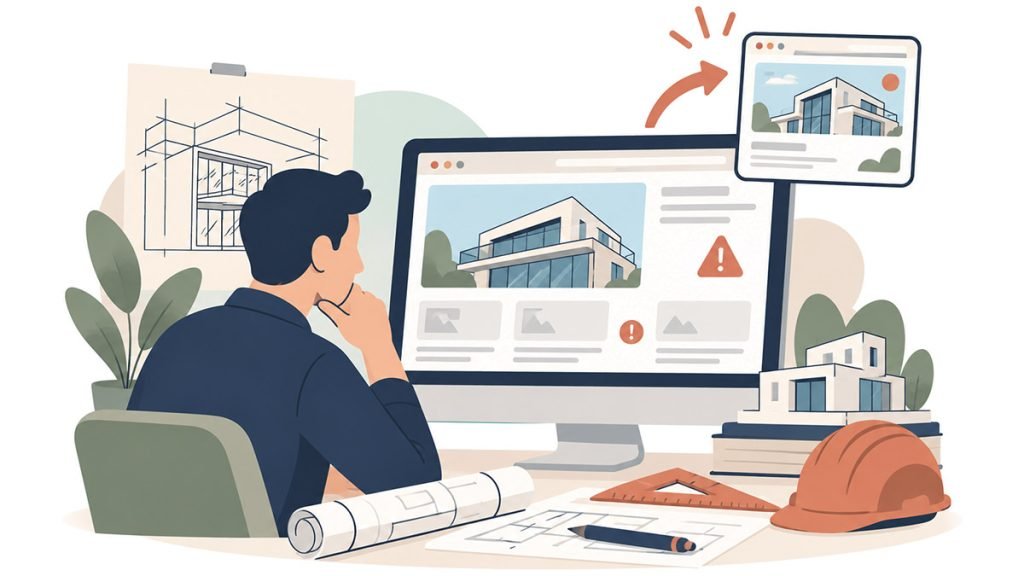
Your architecture practice may produce exceptional work – but does your website communicate the same level of quality?
For many prospective clients, your website is their first real introduction to your practice.
They might find you through Google, a recommendation, a planning application or one of your completed projects. Either way, they will visit your site to answer one question: are you the right architect for their project?
Your website needs to showcase your work, explain your expertise and build trust. It should also help the right people understand your services and feel confident enough to get in touch.
Too many architecture websites fall short. Some look beautiful but generate few enquiries; others rely on striking photography while saying very little about the practice, its projects or the value it brings.
A successful architecture website is more than an online portfolio. It is a business-development asset designed to attract the kinds of projects you want to win.
Here are seven signs that your architecture practice may need a new website.
1. Your Website Looks Dated Compared with Your Architectural Work
Architecture is a visual profession.
Potential clients will naturally judge your practice partly by the way you present your work. Therefore, an outdated website can create the wrong first impression.
Perhaps your practice now delivers larger or more sophisticated projects than it did five years ago. However, your website may still reflect the business you were then.
- The photography might be excellent, but the presentation feels dated.
- Navigation may feel awkward.
- Typography may lack impact.
- Alternatively, the site might simply fail to communicate the quality of your architecture.
This creates a disconnect. Your website should reflect where your practice is today and where you want it to go next.
That does not mean filling every page with elaborate animations. Instead, good web design for architects should create space for your work to speak.
Strong photography, clean layouts, clear typography and thoughtful navigation can communicate quality without overwhelming the visitor.
Most importantly, the website should reinforce the positioning of your practice.
If you want to attract premium projects, your digital presence should support that ambition.
2. Your Website Is a Portfolio Rather Than a Business Development Tool
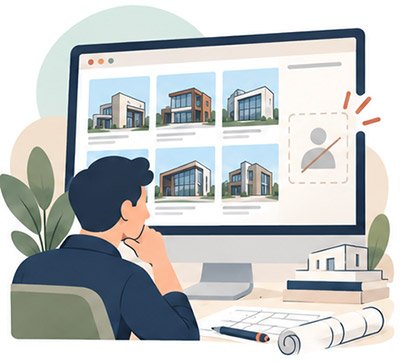
Many architecture websites are essentially digital portfolios. They contain impressive photographs of completed projects, a short About page and basic contact information.
However, there is often very little else.
That may demonstrate design ability, but it misses a significant commercial opportunity. Potential clients need more than inspiration. They want to know whether you understand their type of project. They may want to understand your approach, experience and services.
Furthermore, they may have questions about planning, design stages, timelines or what happens after making an enquiry.
Your website should help answer those questions. For example, an architecture practice might want to attract projects involving:
- Residential architecture
- House extensions
- Home renovations
- Self-build homes
- Commercial architecture
- Property development
- Conservation
- Planning applications
- Interior architecture
Each important service can have its own page. Therefore, visitors can quickly find information relevant to their project. Google can also understand your areas of expertise more clearly.
Your portfolio remains important. However, it should form part of a wider business development strategy rather than becoming the entire website.
3. Your Website Generates Very Few Enquiries
This is perhaps the clearest warning sign.
Ask a simple question: How many genuine project enquiries did your website generate during the last three months?
If you do not know, that itself identifies a problem.
An architecture website should contribute to business development.
Of course, not every visitor will become a client. However, the website should regularly create opportunities when the right people find it.
If traffic exists but enquiries remain low, several problems could be responsible.
- Your message may be unclear.
- The website may not explain your services properly.
- Your project experience may be difficult to explore.
- Trust signals could be weak.
Alternatively, visitors may simply struggle to understand what they should do next.
This is where conversion-focused website design becomes important. The journey should feel natural:
- Potential client searches
- Website visit
- Relevant service or project
- Trust and confidence
- Enquiry
- Consultation
- Potential new project
Every stage matters. Therefore, redesigning an architecture website should not begin with colours or fonts. It should begin with the commercial objective.
What do we want the website to achieve?
4. Potential Clients Cannot Find You on Google
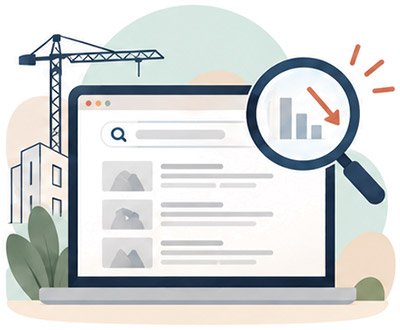
A beautiful website has limited commercial value if potential clients cannot discover it.
Many architecture practices still rely heavily on referrals and repeat business. Those channels remain valuable. However, Google can introduce your practice to people who have never heard of you.
Someone planning a project may search for terms such as:
- architect Dublin
- residential architect Cork
- architect for a house extension
- architect for planning permission
- commercial architect Ireland
- self-build architect
- architectural services Kilkenny
- house renovation architect
If your practice does not appear for relevant searches, those opportunities may go elsewhere.
That is why SEO for Architects should shape the website from the start – not be bolted on after launch.
In practice, that means building clear service and location pages, writing useful project case studies, optimising image-heavy pages for speed, and giving search engines enough context to understand what you do, where you work and which projects you want to attract.
Web design and SEO should work as one system: search helps the right prospects discover you, while thoughtful design and useful content give them a reason to stay.
The goal is not more traffic for its own sake. It is greater visibility for searches connected to the projects your practice genuinely wants to win.
5. Your Projects Look Great but Tell Potential Clients Very Little
Architecture practices often have an extraordinary marketing asset sitting unused.
Their completed projects.
Unfortunately, many architecture websites reduce those projects to an image gallery.
A visitor might see ten beautiful photographs and a title such as:
Residential Extension – Dublin
The photography may be excellent.
- However, what was the project?
- What did the client want to achieve?
- What challenges existed?
- What was unusual about the site?
- How did the practice approach the brief?
- Was planning permission required?
- How was the existing building integrated into the new design?
- What was ultimately created?
These details transform a portfolio image into a compelling project story. Furthermore, well-developed project pages can demonstrate expertise and support SEO.
Imagine someone considering a contemporary extension to a period property. They discover a detailed project on your website showing how you solved a similar challenge. Suddenly, they are not simply looking at attractive architecture. They are seeing evidence that your practice understands their problem.
That can be incredibly persuasive. Therefore, completed projects should become part of your content and lead generation strategy.
Your past work can help win future work.
6. Your Website Does Not Reflect the Projects You Want to Win
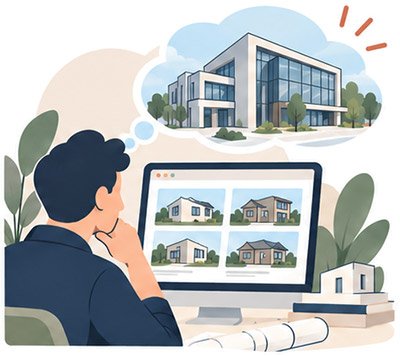
Architecture practices evolve.
Perhaps residential projects helped establish the business, but commercial architecture is now a priority.
Maybe you want more high-end residential work. Alternatively, you may want to work with property developers, commercial clients or self-build customers. Your website should reflect those ambitions.
Too often, websites simply document everything a practice has ever done. That is understandable. However, your website should not only describe your past. It should help shape your future pipeline.
Start by identifying the projects you want more of. Then consider whether the website supports those goals.
For example, if you want more commercial projects, is there a substantial commercial architecture page?
- Are relevant projects clearly presented?
- Do you explain your commercial experience?
- Can a property developer quickly understand why they should speak to your practice?
- Likewise, if self-builds are a growth area, does your website speak directly to people planning a new home?
A growth-focused website should connect your experience with your future commercial objectives. Therefore, website strategy should begin with business strategy.
7. Your Website Has Barely Changed Since It Was Launched
A website should never be considered finished.
- Architecture practices change.
- New projects are completed.
- New team members arrive.
- Services develop.
- Target markets change.
Meanwhile, competitors improve their digital presence and search behaviour evolves.
If your website has remained virtually unchanged for several years, it may no longer support your business properly.
Perhaps your newest project is three years old. Maybe service pages no longer represent what you do. Important recent projects might not appear at all.
Furthermore, the website may lack the content required to compete for valuable Google searches.
A growth-focused website should continue developing.
- New projects can become detailed case studies.
- New service pages can target emerging opportunities.
- Useful articles can answer prospective client questions.
- Location pages can support geographic expansion where appropriate.
- Conversion performance can also be reviewed and improved.
Therefore, launch day should be the beginning of your website strategy rather than the end.
What Should a Modern Architecture Website Do?
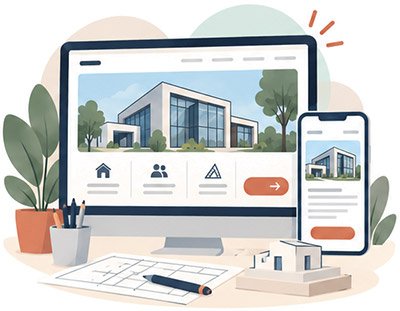
A successful architecture website design needs to balance several objectives.
First, it should showcase the quality of your architectural work. However, it should also explain your services clearly. It should demonstrate expertise and build confidence.
Furthermore, prospective clients should be able to understand whether you are suitable for their type of project.
The website should also perform well on mobile devices and load quickly. Google should be able to understand its structure and content. Most importantly, visitors should always have an obvious route towards making contact.
When these elements work together, your website becomes much more than a portfolio. It becomes part of your growth infrastructure.
Build the Website Around the Projects You Want More Of
Before redesigning an architecture website, we believe there is a more important conversation to have.
- What does growth look like for your practice?
- Perhaps you want more residential projects in Dublin.
- Maybe you want larger commercial contracts.
- You may want to attract property developers.
Alternatively, your opportunity could lie in extensions, renovations, conservation or self-build projects.
Those answers should influence the website.
- They affect site structure.
- They influence service pages.
- They shape keyword research.
- They determine which projects should receive greater prominence.
- Furthermore, they help determine the content strategy after launch.
This is why we do not believe architecture website projects should start with design. They should start with growth.
Your Website Should Help Attract Higher-Value Architecture Projects
Not every website enquiry has the same value. Therefore, simply increasing the number of leads should not be the only objective.
A better strategy is to attract more of the right opportunities.
If your practice wants larger residential projects, the website should support that goal. If commercial work is more valuable, the strategy should reflect it. Likewise, if your ideal clients are developers, your website should communicate directly with them.
This affects everything from project selection to website content.
As a result, your digital presence becomes aligned with your commercial strategy. The objective is not simply more enquiries. It is more relevant opportunities for the type of architecture practice you want to build.
SEO for Architects and Web Design Should Work Together
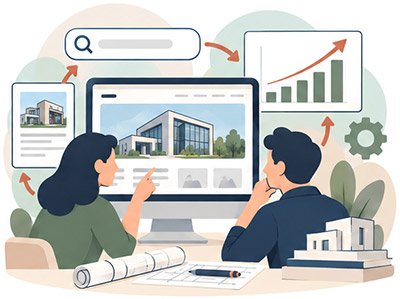
SEO for Architects works best when it is part of the brief from day one. A visually impressive site cannot perform commercially if search engines struggle to understand it – or if the right prospects never find it.
Keyword research can reveal how people search by service, project type and location. Those insights should shape the website structure, service pages, location content and project case studies.
Detailed project stories give your images context, while fast-loading pages and well-optimised visuals make it easier for people – and search engines – to explore your work.
When visibility, credibility and user experience reinforce one another, your website becomes a dependable source of qualified enquiries rather than a passive portfolio.
More Than Web Design for Architects
At New World Digital, we do not believe in building a website, handing it over and disappearing. We start by understanding the practice behind the portfolio: the projects you want more of, the clients you want to reach, the locations that matter and the expertise that sets you apart.
From there, we build a practical growth strategy that can include a new website, SEO for Architects, service and location pages, project case studies and ongoing optimisation.
Everything is designed around one outcome: helping your digital presence create better opportunities for your practice.
Does Your Architecture Practice Need a New Website?
If your website feels dated, is hard to find on Google or rarely generates the right enquiries, it may be holding your practice back.
A redesign should do more than refresh the visuals. It should give you a stronger platform for the next stage of your business – one that reflects the practice you have become and helps you win the work you want next.
New World Digital can review your current website, search visibility and digital positioning, then identify the clearest opportunities to improve performance.
Book a website and SEO review today. Let’s turn your architecture website into a clearer, more credible and more effective source of qualified project enquiries.