
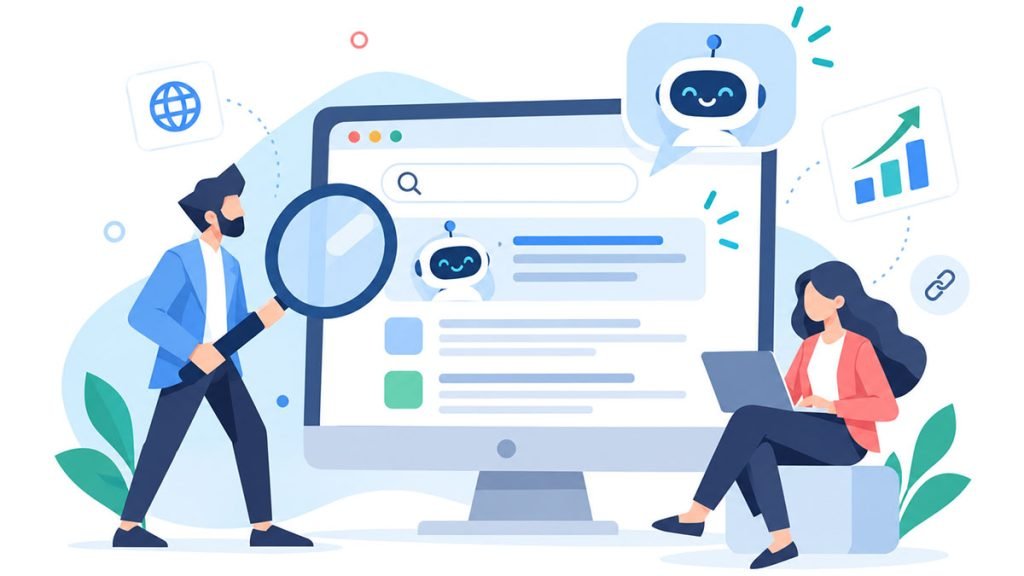
Search is changing quickly. People still use Google, but they also ask questions directly in AI tools. Instead of browsing a long list of links, they may receive a summary, comparison or recommendation within seconds.
For businesses, this creates a new visibility challenge. Traditional search rankings still matter, but being understood and selected by AI systems matters too. That is where AI Search Visibility comes in.
AI Search Visibility is the ability of your business or content to appear within AI-generated answers. Therefore, the goal is not simply to rank for another keyword. The goal is to become a useful source that AI systems can confidently reference.
What Is AI Search Visibility?
AI Search Visibility describes how often your business or content appears when AI-powered search tools answer relevant questions. This can happen in Google AI features, ChatGPT search, Microsoft Copilot and other answer engines.
For example, someone may ask how to choose an IT support company or which survey suits an older house. If your website gives a clear, useful answer, it has a better chance of becoming part of the response.
However, AI visibility is not separate from SEO. The two areas overlap heavily. Good content, clear site structure, crawlability, authority and relevance still form the foundation.
Why Does AI Search Visibility Matter?
Search journeys are becoming less predictable. A customer may discover your company through a standard result, an AI summary or a cited source. As a result, businesses need content that works across several discovery routes.
AI answers can also appear early in the research process. Therefore, useful content can build awareness before a customer is ready to make contact.
This matters for lead generation because visibility creates opportunities. Yet visibility alone is not enough. Once someone reaches your site, clear messaging and effective web design must help turn that interest into an enquiry.
How Do AI Search Engines Choose Sources?
There is no single checklist that guarantees inclusion in an AI answer. Google states that its AI search features do not require special optimisation beyond strong search fundamentals. Pages still need to be crawlable, indexable, useful and suitable to appear in search.
AI systems also need information they can interpret with confidence. Therefore, a useful page should make three things obvious – what it covers, which question it answers and why the information can be trusted.
1. Answer Real Customer Questions Clearly

AI search often starts with a question. Therefore, your content should answer the questions that real customers ask before they buy.
Start with service pages, sales conversations, emails and enquiry forms. Look for repeated questions about price, process, timing, comparisons and common problems. Then turn those questions into useful sections.
Where possible, give the direct answer near the start. After that, add the context a reader needs. This answer-first structure helps people scan the page and makes the meaning easier to identify.
For example, “How Long Does a Building Survey Take?” is clearer than “Our Process”. Likewise, “What Is Included in Managed IT Support?” gives users and search systems immediate context.
2. Build Topic Depth Around Your Main Services
A single page cannot answer every question about a complex service. Instead, build a useful group of pages around each important topic.
Your main service page can explain the offer. Supporting articles can cover costs, comparisons, problems and buying questions. Internal links should connect those pages naturally.
This approach strengthens your overall SEO strategy too. More importantly, it shows that your website covers a subject in depth rather than mentioning it briefly.
However, do not create dozens of thin articles just to increase page numbers. Each page should have a clear purpose and offer something genuinely useful.
3. Make Your Business Easy to Understand
AI systems need to understand who you are, what you do and where you operate. Therefore, business information should remain consistent across your website.
Use clear service names. Explain your location and service areas. Keep contact details accurate. In addition, your About page should explain your experience and the customers you serve.
For local businesses, accurate information also matters across external profiles. This helps reduce ambiguity around the organisation behind the website.
Strong website design supports this clarity. A logical navigation structure helps users and crawlers find important service, location and information pages.
4. Give AI Systems Evidence Worth Referencing
Generic content is easy to reproduce. Original evidence is harder to replace.
Therefore, add information from your own experience where possible. Useful examples include case studies, project results, process details, original photos and practical observations.
You do not need to publish confidential data. Instead, show what your business has learned. For example, explain common mistakes you encounter or factors that affect a project timeline.
This also makes the content more useful to human readers. As a result, the same work can support trust, search performance and conversion.
5. Keep Important Content Crawlable
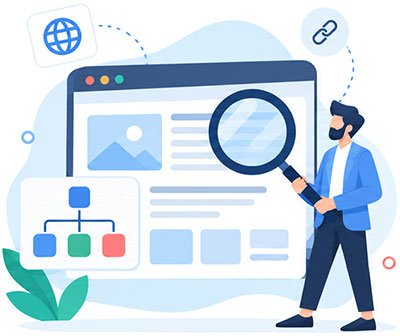
Great content cannot help if search systems cannot access it. Therefore, technical visibility remains essential.
Important information should appear as readable text. Your site should also have sensible internal links, working pages and an XML sitemap.
Use Google Search Console to monitor indexing and inspect important URLs. In addition, Bing Webmaster Tools can help you review Bing visibility and crawling.
If ChatGPT visibility matters to you, review the OpenAI crawler documentation. It explains the crawler used for ChatGPT search and how site owners can control access.
6. Use Structured Data Where It Makes Sense
Structured data gives search engines extra context. For example, it can describe an organisation, local business, article or breadcrumb trail.
However, structured data is not a shortcut to AI Search Visibility. Google says that no special AI schema is required for its AI features. Therefore, use relevant schema because it accurately describes the page, not because you expect guaranteed inclusion in an AI answer.
You can review common formats at Schema.org. You can also test eligible markup with Google’s Rich Results Test.
7. Combine AI Search Visibility With Better Conversion
Being cited by an AI answer is valuable only if the next step works. Therefore, your landing pages still need to convert visitors into enquiries.
Make the main service clear. Show proof. Explain the next step. Keep forms simple. In addition, use visible calls to action for people who are ready to speak with you.
This is where web design, SEO and lead generation need to work together. Traffic has little commercial value if visitors leave without understanding what to do next.
How Can You Measure AI Search Visibility?
Measurement is still developing, so there is no perfect dashboard for every AI platform. However, you can track useful signals.
First, monitor organic impressions, clicks and landing pages in Google Search Console. Google includes traffic from its AI search features within overall web search reporting. Therefore, changes in search demand and page performance still matter.
Next, review referral traffic in your analytics platform. You can also test important customer questions manually and note which sources appear.
Most importantly, track outcomes. More mentions are useful, but qualified enquiries, calls and sales remain the real business goal.
Common AI Search Visibility Mistakes
- Writing only for bots. AI-focused content still needs to help real people first.
- Publishing vague answers. Clear, specific information is easier to understand and more useful.
- Creating thin content at scale. More pages do not automatically create more authority.
- Ignoring technical access. Blocked or poorly indexed pages may never become useful sources.
- Using unsupported claims. Trust improves when statements are accurate and evidence is provided.
- Forgetting conversion. Visibility should support enquiries and revenue, not just mentions.
Key Takeaways

- AI Search Visibility is about being understood, trusted and selected as a useful source.
- Strong search fundamentals remain important for AI-powered search.
- Answer real customer questions directly and add useful context afterwards.
- Build deeper topic coverage around your most valuable services.
- Use original experience, examples and evidence to make your content more distinctive.
- Keep important pages crawlable, indexable and easy to navigate.
- Use relevant structured data, but do not treat it as a shortcut to AI answers.
- Measure visibility alongside enquiries, calls and other commercial outcomes.
Conclusion
AI Search Visibility is becoming an important part of online discovery. However, businesses do not need to abandon the foundations that already make websites successful. Clear content, strong technical structure, useful expertise and trustworthy information remain central.
The biggest change is how information gets delivered. Instead of competing only for a traditional ranking position, your content may also compete to become part of the answer itself. Therefore, businesses that explain their expertise clearly will be better placed as AI-powered search continues to grow.
If you want your website to perform across traditional and AI-powered search, New World Digital can help. Our web design services create clear, fast and conversion-focused websites that give your content a strong foundation.
We can also strengthen your visibility through SEO and support growth with targeted lead generation. Together, these services can help your business get found, earn trust and turn more online visibility into real enquiries.